9 LinkedIn DM Copywriting Rules That Get 32-57% Reply Rates (2026)
The average LinkedIn direct message response rate is 8-12%. Our campaigns hit 32-57%. 9 tested copywriting rules, the 5-3-2 rule explained, and how to turn replies into meetings.

You sent 200 LinkedIn DMs last month. You got 14 replies. Most were "not interested" or "let's stay in touch".
The average LinkedIn direct message response rate is 8-12%. Our campaigns run at 32-57%. The difference is not the tool. It is the copywriting.
This guide breaks down the 9 rules behind those numbers, tested across 5,000+ ReactIn campaigns.
TL;DR
The 9 rules, in one scroll:
- Never open with "Hello {{firstname}}". Your prospect's brain recognises the mail merge in 0.3 seconds.
- Do not reveal your tracking source. Use signals to target, not to creep.
- One message = one goal. Get a reply, qualify, or offer value. Never all three at once.
- Write like WhatsApp, not corporate email. Short sentences. No "Dear". No "I hope this finds you well".
- A 2-line question beats a 10-line pitch. 23% reply rate vs 7%.
- Agitate the pain before pitching. Nobody cares about your product until they feel the problem.
- Build context before selling. Message 1 asks. Message 2 responds. Message 3 offers value.
- Max 2 emojis. Emojis are punctuation, not decoration.
- Make replying easier than ignoring. 1- to 5-word answers win.
The data: what 32-57% reply rates look like
Before we dive into the rules, here is the proof. Below is a screenshot of 5 real ReactIn campaigns I ran applying the 9 rules.

Campaign breakdown
- Campaign 1: 96 leads, 32.26% reply rate
- Campaign 2: 353 leads, 35.71% reply rate
- Campaign 3: 825 leads, 46.62% reply rate
- Campaign 4: 637 leads, 57.53% reply rate
Average LinkedIn DM reply rate across the industry: 8-12%. My average: 35-45%. Same platform. Same inbox limits. Different copy.
What is the average LinkedIn direct message response rate in 2026?
Every week someone asks me: "François, what is the average LinkedIn message reply rate, really?" The honest answer depends on what you measure.
Based on 5,000+ campaigns we see in ReactIn, here is the realistic 2026 benchmark for LinkedIn DMs sent after a connection is accepted.
| Audience type | Average reply rate | Top 10% |
|---|---|---|
| Pure cold, generic template | 3-6% | 10-12% |
| Cold + ICP filters | 8-12% | 18-22% |
| Warm: post engagers | 18-28% | 40-50% |
| Warm: signal-based (intent) | 25-35% | 50-60% |
Reply rate benchmarks by industry (2026)
Reply rates vary significantly across industries. B2B SaaS prospects are bombarded with outreach, so standing out requires sharper copy. Here is what we see across 5,000+ ReactIn campaigns in 2026.
| Industry | Cold reply rate | Warm signal-based reply rate |
|---|---|---|
| B2B SaaS / Tech | 5-9% | 22-32% |
| Marketing / Agency | 7-11% | 25-38% |
| Recruiting / HR Tech | 10-15% | 30-45% |
| Financial Services | 4-8% | 18-28% |
| Consulting / Professional Services | 8-12% | 28-40% |
Reply rate by personalization level
The way you personalize matters more than whether you personalize. Here is the breakdown by personalization approach.
| Personalization level | Average reply rate | Top 10% |
|---|---|---|
| No personalization (same template for everyone) | 3-5% | 8% |
| Variable-based ({{firstname}}, {{company}}) | 8-12% | 16% |
| Signal-based (intent triggers + contextual copy) | 25-35% | 55%+ |
Signal-based personalization delivers 4.2x higher reply rates than variable-only personalization on LinkedIn in 2026.
ReactIn internal data, 5,000+ campaigns, January-June 2026
Two things move the number: audience warmth and copywriting. Cold lists cap out around 12% no matter how good the message. Warm signal-based lists open the door to 30%+ reply rates, but only if the copy respects the 9 rules below.
What is the 5-3-2 rule on LinkedIn?
The 5-3-2 rule is a content ratio popularised by Mike Lallande and relayed by sales coaches for a decade. It is a simple heuristic for deciding what to publish on LinkedIn to stay interesting without being salesy.
Out of every 10 posts you publish on LinkedIn:
- 5 posts share content from other people or curated from the industry. You aggregate and add your point of view. You are useful.
- 3 posts are your own original content. Frameworks, opinions, case studies, lessons learned. You build authority.
- 2 posts are personal. Behind the scenes, failures, personal wins. You build connection.
Why it matters for DMs: the 5-3-2 rule is a content rule, not a messaging rule, but the underlying logic applies. If 80% of your DMs pitch, you burn the relationship. Apply the same ratio to your outbound cadence. For every 10 touchpoints with a prospect (post engagement, comment, DM, reply), 5 should add value, 3 should be original input, and only 2 should move the sale forward.
What is the 4-1-1 rule on LinkedIn?
The 4-1-1 rule is another content ratio framework, originally popularised by Tippingpoint Labs and Joe Pulizzi. It was designed for Twitter but has been widely adopted on LinkedIn.
For every 6 pieces of content you share:
- 4 pieces of relevant content from other thought leaders. You curate and share what your audience cares about. You stay top of mind without being self-promotional.
- 1 soft self-promotion. A case study, a framework you built, a lesson from your work. Useful content that happens to showcase your expertise.
- 1 hard self-promotion. A product launch, a demo, a CTA, a pricing page. The actual sell.
The logic is the same as the 5-3-2 rule: earn attention before asking for it. When applied to DM outreach, it means your prospect should have seen 4-5 valuable interactions from you (likes, comments, shares) before they ever receive a direct pitch in their inbox.
4-1-1 vs 5-3-2: which one to use?
Both frameworks teach the same lesson: mostly value, rarely selling. The difference is emphasis.
- The 5-3-2 rule splits content into curated, original, and personal. Better for building a LinkedIn personal brand.
- The 4-1-1 rule splits content into shared, soft-sell, and hard-sell. Better for B2B marketers who need a clearer promotion budget.
The 9 LinkedIn DM copywriting rules
Every rule below is tested. Every example is pulled from campaigns that actually ran. Copy them.
Rule 1: Never start with "Hello {{firstname}}"
Your prospect's brain instantly recognises automation. "Hello Jean," triggers the same pattern as spam email. Reply rate drops before they read line two.
Principle: Names should feel natural, not like a mail merge. Drop the comma. Drop the "Hello". Start with a word a human would actually text.
Rule 2: Do not reveal your tracking sources
Standard advice tells you to say: "I saw you commented on Paul's post about LinkedIn automation." It feels personal. It reads as surveillance.
Use the signal to segment, not to personalise. Someone engaged with a post about LinkedIn automation? Send them a message about that topic. Do not tell them you are tracking them.
Exception
When the signal is public and adds value, lean in.
Rule 3: One message = one goal
Do not try to qualify, pitch, and book a call in the same message. Too much cognitive load. Your prospect bounces.
Three goals in one message. Each dilutes the other.
Do this
Principle: Move them forward one step at a time.
Rule 4: Write like WhatsApp, not corporate email
Read your DM out loud. Does it sound like a text message or a cover letter? If it is the cover letter, rewrite it.
Key differences
- No "Dear" or "Hello"
- Short sentences
- Natural language
- Questions, not monologues
Principle: LinkedIn is social. Write socially.
Rule 5: A 2-line question beats a 10-line pitch
Internal data from 2,000+ of our campaigns:
- Messages with a question in the first 2 lines: 23% reply rate.
- Messages that pitch for 10 lines: 7% reply rate.
Questions engage. Pitches create resistance.
Principle: Ask first. Pitch later.
Rule 6: Agitate the pain first, then show the solution
Do not lead with your product. Nobody cares about your product yet. They care about their problem.
Principle: Agitate the problem before offering the solution.
Rule 7: Build context before selling
Do not pitch immediately. Earn the right to pitch across 2-3 messages.
The timeline
- Message 1: ask a question.
- Message 2: respond to their answer.
- Message 3: offer value (now you can mention your product).
Context-first
They reply: "Yeah, using [Tool]."
They reply: "Mostly conversations. 8% reply rate."
Principle: Earn the right to pitch.
Rule 8: Max 2 emojis (you are not 16)
Too many emojis do not make you memorable. They make you look desperate.
Principle: Emojis are punctuation, not decoration. One per section, max.
Rule 9: Make replying easier than ignoring
If your message needs effort to respond to, it will not get a response. The easier you make it to reply, the more replies you get.
Easy questions that convert
- LinkedIn working for you?
- Getting leads or conversations?
- Happy with your current tool?
- Tried automation before?
Principle: All four answerable in 1-5 words. That is the bar.
Putting it all together: before and after
Same campaign, same audience, same sender. Only the copy changes.
Before (8% reply rate)
Breaks 6 of the 9 rules.
After (32%+ reply rate)
Follows all 9 rules.
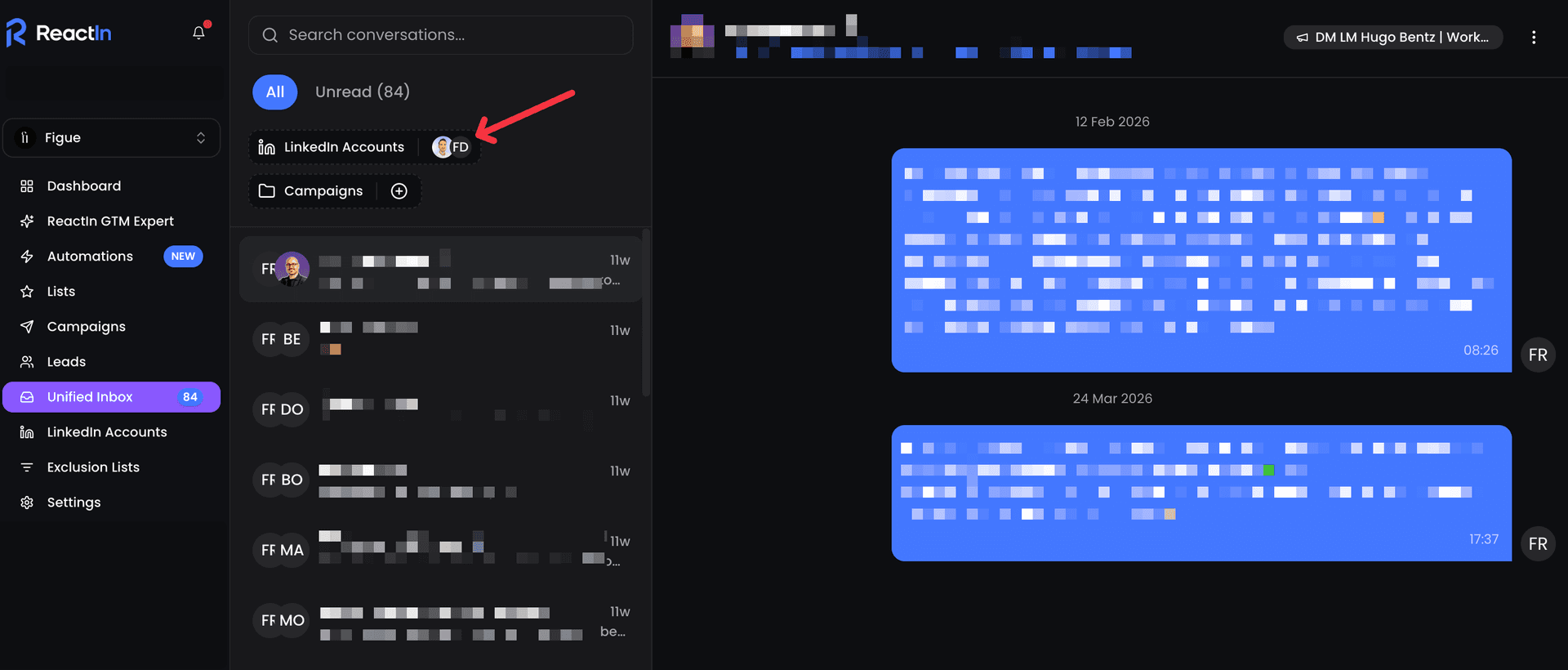
How to reply to a LinkedIn DM and actually move the deal forward
Getting a reply DM is the goal. What you do in the next 60 seconds decides whether you book a call or kill the thread.
Three rules for replying to a LinkedIn DM from a prospect.
- Reply within 2 hours. Reply rate decays fast on LinkedIn. A DM answered in 2 hours gets 3x more follow-up responses than one answered 24 hours later.
- Match their tone. If they answered with 4 words, answer with 4 words. If they sent a paragraph, you can send a paragraph.
- Always end with a question. A reply DM without a question is a dead end. The question keeps the thread alive and gives the prospect a reason to write back.
Common mistakes
Mistake 1: Being too vague
This respects Rule 2 (no tracking leak) but goes too far.
Be vague about how you found them. Be specific about what you are asking.
Mistake 2: Giving up after message 1
Most replies come on message 2 or 3. Silence on message 1 is not a rejection.
Persistence with respect wins. Two follow-ups, spaced 3-5 days apart. No more.
Scaling the 9 rules with ReactIn
Writing good DMs is one problem. Doing it at scale, across every signal source, without breaking the rules, is another. ReactIn is built for intent-based automation.

How it works, in 4 steps
- Track behavioural signals. Post engagement, profile visits, webinar attendance, job changes, Calendly bookings, Tally submissions.
- Auto-build SmartLists. Every signal drops the lead into the right list, no spreadsheet needed.
- Send DMs following the 9 rules. Templates are pre-built around the pain-first, question-first structure.
- Track reply rates and optimise. Per-campaign reply rate, acceptance rate, and thread status in one dashboard.
Relevant ReactIn templates
- Your Post Engagers (Pixel): capture everyone who likes or comments on your content.
- Profile Visitors: scrape daily profile visitors (LinkedIn Premium required).
- LinkedIn Webinar Attendees: scrape attendees of LinkedIn Events.
- Received Connection Requests: auto-accept incoming invites and send a welcome DM.
- Competitor Post Engagers (Spyer): track engagers from competitors and influencers.
Best LinkedIn DM tools for speed and efficiency (2026)
Great copywriting is step one. But sending personalized, rule-compliant DMs to 50-200 prospects per day, without getting your account restricted, requires the right tool.
Not all LinkedIn DM tools are equal. Most focus on volume. The best ones help you implement the 9 copywriting rules at scale while keeping your LinkedIn account safe.
What to look for in a LinkedIn DM tool
Based on running 5,000+ campaigns, here are the 5 criteria that actually matter.
- Signal-based targeting. Can the tool trigger outreach based on behavioural signals (post engagement, profile visits, event attendance), or only static lists?
- Multi-step sequences. Can you build message 1 → message 2 → message 3 cadences with conditional logic (only send message 3 if they replied to message 2)?
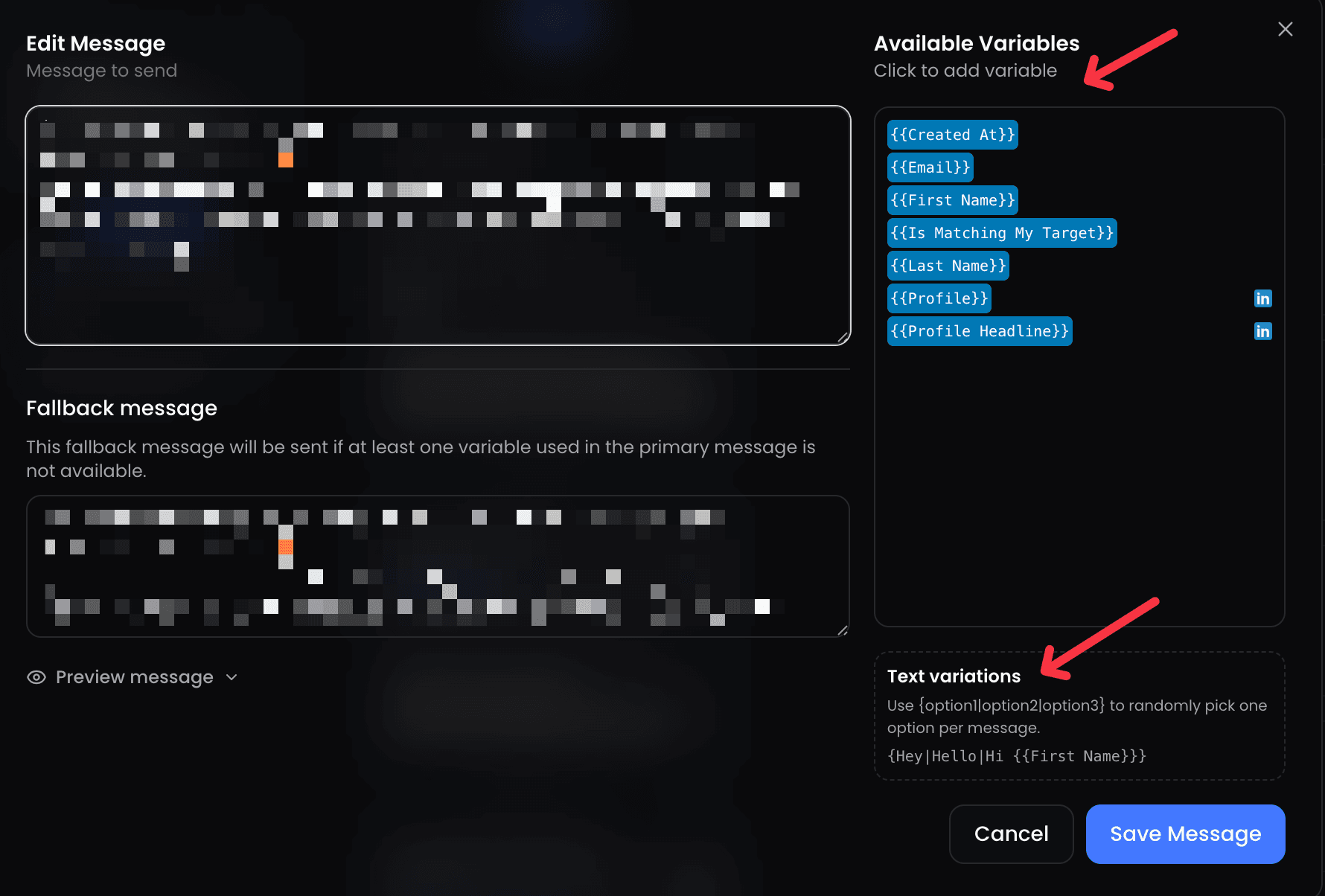
- Personalization variables. Does the tool support dynamic variables beyond {{firstname}} and {{company}}? Custom fields, AI-generated lines, and signal-specific variables make a real difference.
- Safety and rate limits. Does the tool respect LinkedIn's daily connection and message limits? Tools that push volume over safety get accounts restricted.
- Reply tracking and unified inbox. Can you see all conversations in one place, track reply rates per campaign, and respond without switching tabs?
LinkedIn DM tools comparison (2026)
| Feature | Volume-first tools | ReactIn (signal-based) |
|---|---|---|
| Targeting | Static CSV / Sales Nav lists | 20+ behavioural signals + SmartLists |
| Personalization | {{firstname}}, {{company}} | Custom variables + AI enrichment |
| Safety | Aggressive daily limits | Adaptive rate limiting, cloud-based |
| Average reply rate | 5-12% | 27% (5,000+ campaigns) |
Key takeaways
- Average LinkedIn direct message response rate is 8-12%. Warm signal-based campaigns reach 25-35%. Copy is the lever.
- The 9 rules, in order: no "Hello {{firstname}}", hide your tracking, one goal per message, WhatsApp tone, 2-line questions, pain first, context before selling, 2 emojis max, easy to reply.
- The 5-3-2 rule guides your content (5 curated, 3 original, 2 personal). Apply the same ratio to outbound cadence.
- Reply fast, match tone, always end with a question. That is the reply DM playbook.
- Use ReactIn to track signals and auto-build SmartLists so you spend your time writing messages, not scraping lists.
This guide is part of our complete LinkedIn automation playbook for 2026 - covering everything from intent signals to safety limits.
For the complete strategy from warmup to closed deals, read our LinkedIn Outreach Playbook for 2026.
Frequently Asked Questions
Sources & Further Reading
- According to HubSpot's sales statistics, personalized outreach messages generate 3x more replies than generic templates, reinforcing why these 9 copywriting rules matter.
- LinkedIn's own guide to effective messaging confirms that conversational, value-first messages outperform formal sales pitches on the platform.
- For more data on cold outreach effectiveness, Gong's research on B2B sales conversations provides extensive analysis of what makes prospects respond to sales messages.
Related Articles

The 6 Best Waalaxy Alternatives in 2026 (Cloud Tools, No Extension)
Waalaxy runs as a Chrome extension that pauses when the browser breaks. Here are the 6 best cloud-based alternatives for 2026, with verified pricing and the right pick for your motion.

Why Waalaxy Stopped Working in 2026 (And How to Fix Your Reply Rates)
Your Waalaxy reply rates cratered in 2026 and you cannot tell why. Here is what changed, why blast outreach stopped working, and how intent-based prospecting brings double-digit reply rates back.

How to Get Started with ReactIn: The Complete Starter Pack (2026)
New to ReactIn? Learn what Spyer, Pixel, and campaigns do, and follow a layer-by-layer starter pack to build an intent-based LinkedIn pipeline that runs on autopilot.

Best Software Affiliate Programs in 2026 (Ranked by Category)
Your software stack costs hundreds a month and earns you nothing. The best software affiliate programs for 2026 fix that, ranked by commission, recurring value and category. ReactIn leads for B2B and LinkedIn audiences, next to Notion, NordVPN, Semrush, HubSpot, Systeme.io and Hostinger.
Best LinkedIn Outreach Tool for B2B SaaS in 2026 (Ranked by Pipeline Quality, Not Feature Lists)
The 7 best LinkedIn outreach tools for B2B SaaS in 2026, ranked by pipeline quality and true cost. ReactIn replaces 3-4 tools ($69/mo vs $500+/mo stack) with intent signals, AI enrichment, and automated campaigns. Full 5-seat cost comparison included.
LinkedIn Prospecting Guide 2026: Build Pipeline With Signal-Based Targeting
The complete LinkedIn prospecting guide for 2026. ICP definition, lookalike audiences, SmartList building, and signal-based targeting. Turn LinkedIn into your #1 pipeline source.
ReactIn Alternatives & Comparisons 2026: Find the Right LinkedIn Tool
Compare ReactIn with every major LinkedIn automation tool in 2026. Head-to-head comparisons with BeReach, Gojiberry, Phantombuster, Waalaxy, and more. Find the right tool for your use case.
Free LinkedIn Tools 2026: 4 Tools to Preview, Scrape, Hook & Coach
4 free LinkedIn tools by ReactIn - no signup required. Preview your posts pixel-perfect, scrape post likers into lead lists, generate scroll-stopping hooks with AI, and get GTM coaching. The complete free toolkit for B2B professionals.
Best LinkedIn Tools 2026: The Complete B2B Stack Guide
The definitive guide to LinkedIn tools in 2026. Automation, scraping, AI sales tools, and CRM integrations - compared and ranked. Build your ideal LinkedIn tech stack at any budget.
Affiliate Marketing Guide 2026: From First Commission to Passive Income
The complete affiliate marketing guide for 2026. Choose your niche, find the best programs (B2B, SaaS, recurring), build your funnel, and scale to passive income. Includes links to our ranked program lists.
LinkedIn Outreach Playbook 2026: From Warmup to Closed Deals
The complete LinkedIn outreach playbook for 2026. Account warmup, connection request strategies, DM copywriting rules, multi-touch sequences, and optimization tactics. Based on data from 5,000+ campaigns.
Best LinkedIn Automation Tool for Agencies in 2026 (Ranked by Total Cost, Not Feature Lists)
The 7 best LinkedIn automation tools for agencies in 2026, ranked by true cost at scale. ReactIn replaces 3-4 tools ($69/mo vs $300+/mo stack) with intent signals, AI enrichment, and unified inbox. Full "True Cost for 10 Accounts" comparison included.

Best Marketing Affiliate Programs in 2026 (Ranked by Niche)
You recommend marketing tools every week and earn nothing. The best marketing affiliate programs for 2026 fix that, ranked by recurring rate, cookie and niche. ReactIn leads for B2B and LinkedIn marketers, next to AWeber, Semrush, GetResponse, Leadpages, Unbounce and Moosend.

Best B2B Affiliate Programs in 2026 (Ranked for Business Audiences)
The best B2B affiliate programs for 2026, ranked by value per business referral and audience fit. ReactIn leads for B2B, LinkedIn and GTM creators with 30% recurring for life, compared against HubSpot, Pipedrive, monday.com, ClickUp, ActiveCampaign and Semrush.

Best SaaS Affiliate Programs in 2026 (Ranked by Recurring Commission)
The best SaaS affiliate programs for 2026, ranked by recurring economics and audience fit. ReactIn leads for LinkedIn, GTM and agency creators with 30% recurring and lifetime attribution, compared against Systeme.io, GetResponse, ActiveCampaign, HubSpot, Kit and Semrush.

Best Recurring Affiliate Programs in 2026 (Lifetime Commissions Ranked)
The best recurring affiliate programs for 2026, ranked by recurring quality, lifetime attribution over 12-month caps. ReactIn leads for B2B, LinkedIn and GTM creators with 30% recurring for life, compared against Systeme.io, Kit, GetResponse, Cloudways, HubSpot and Teachable.

How to Build a LinkedIn Lookalike Audience in 2026 (Full Workflow + Screenshots)
LinkedIn never shipped a native Lookalike Audience for outbound. Here is the full 2026 workflow: pick the seed, write your ICP, run the waterfall scrape, ship a 50-lead audience in under 5 minutes that hits 20-28% reply rates.

LinkedIn Lookalike Audience: How to Find Leads That Match Your Best Customers (2026)
LinkedIn never shipped a native lookalike audience for outbound. Here is how to build one in 3 minutes, with 3 detailed playbooks for agencies, founders, and SDRs hitting 22-28% reply rates.

LinkedIn Lookalike Leads: Clone Your Best Customers in 3 Minutes (2026)
Drop one LinkedIn profile, describe your ICP and persona, and ReactIn returns up to 100 prospects who match. The Meta Lookalike playbook, applied to B2B prospecting. 22% reply rates vs 8% from Sales Nav.

Best Time to Post on LinkedIn in 2026 (50,000+ Posts Analyzed)
When should you post on LinkedIn for maximum engagement? Analysis of 50,000+ posts reveals the best times, days, and strategies to maximize reach in 2026.
LinkedIn Connection Request Note: Character Limit, 2026 Rules & Best Templates
The official LinkedIn connection request note limit in 2026 is 300 characters, on every plan. But notes between 120 and 180 characters win on acceptance rate. Full breakdown, 10 templates, and the difference with InMail and DM limits.
LinkedIn Connection Requests: With or Without a Note? (2026 Data)
Should you add a note to LinkedIn connection requests? 80,000+ requests analyzed. No-note invites get 55–68% acceptance vs 28–45% with notes. See when each approach wins.
Best LinkedIn Automation Tools 2026 - Top 6 Ranked
Honest comparison of the 6 best LinkedIn automation tools in 2026. Tested hands-on with real campaigns. ReactIn, Expandi, Dripify, Waalaxy, HeyReach, and Lemlist ranked by results.
How to Automate LinkedIn Connection Requests: 5 Rules for 26% Reply Rates (2026)
Stop losing leads. 5 proven rules to automate LinkedIn connection requests safely and hit 26%+ reply rates with personalized welcome messages.
How to Automatically Accept LinkedIn Connection Requests (and Send a Welcome DM)
Learn how to automatically accept LinkedIn connection requests and send personalized welcome DMs. Step-by-step ReactIn setup, compare 5 tools, and maintain 26%+ reply rates safely.
Best Go-to-Market Tools for B2B SaaS 2026: The 12-Tool GTM Stack
The best go-to-market tools for B2B SaaS in 2026. A complete 12-tool GTM stack with automation platforms that actually integrate - from prospecting to closing, built for scaling SaaS businesses. ~$500/month total.
How to Warm Up a LinkedIn Account Safely Before Scaling Outreach (2026)
Step-by-step 4-week plan to warm up your LinkedIn account safely. Daily limits, organic engagement strategy, and how to scale outreach without getting restricted.
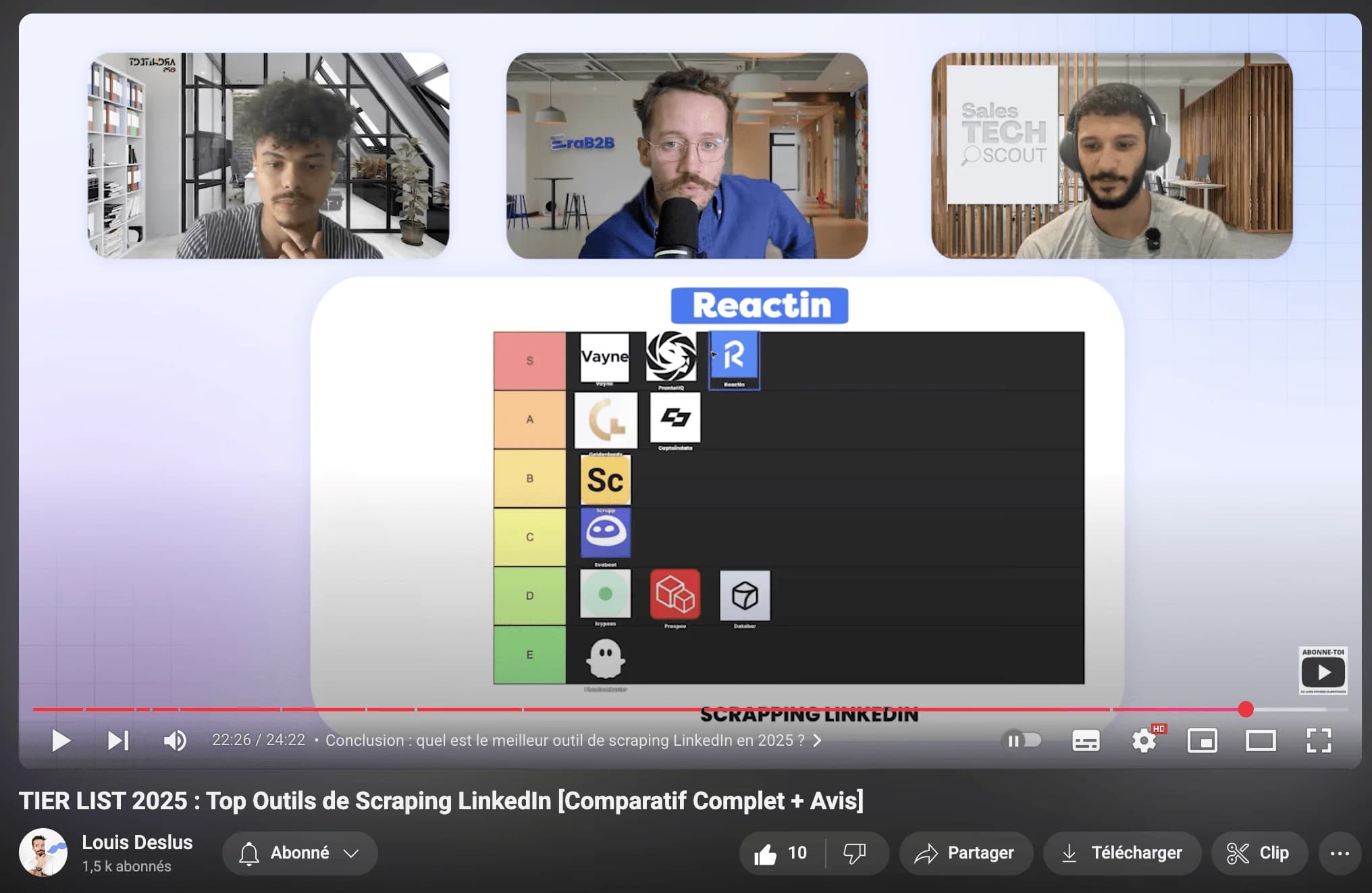
Top LinkedIn Scraping Tools for B2B Growth (2026 Review)
Honest comparison of the best LinkedIn scraping tools in 2026. ReactIn, PhantomBuster, Captain Data, Evaboot, and Prospeo ranked by features, safety, and pricing.
LinkedIn Automation Guide: The Complete 2026 Playbook
The definitive guide to LinkedIn automation in 2026. 5 intent-based workflows, 10 messaging rules, safety limits, and tool comparisons. 27% average reply rate across 5,000+ campaigns.
The 7 Best AI Sales Tools to Close More Deals in 2026
Discover the best AI sales tools in 2026. Top AI-powered tools for closing deals: ReactIn for LinkedIn outreach, Allo as the best AI phone agent, Clay for prospecting, Attio for CRM, and more.
Intent-Based Marketing Automations in 2026: The Complete Guide to 3x Reply Rates
Stop blasting the same message to every lead. Intent-based marketing automations use buyer signals to reach the right person at the right moment - delivering 3x higher reply rates. 5 workflows, benchmarks, and step-by-step setup inside.

How to Balance LinkedIn Campaign Volume Across Tools (Waalaxy, HeyReach, Expandi, Dripify, LGM, PhantomBuster, Gojiberry vs ReactIn)
Most LinkedIn automation tools force you to pick: one big cold campaign, or none. Here is how Waalaxy, HeyReach, Expandi, Dripify, LGM, PhantomBuster and Gojiberry actually let you split daily volume between campaigns - and how ReactIn’s new Campaign Ponderation finally lets you run a 90/5/5 mix of cold + signal-based outreach.

ReactIn vs BeReach (2026): Intent-Based Outbound OS or LinkedIn API Toolkit?
BeReach is a LinkedIn API for developers. ReactIn is an intent-based outbound OS for sales teams - 20+ signal sources, SmartLists, AI enrichment, and 27% reply rates out of the box. Full feature-by-feature comparison.

ReactIn vs Waalaxy (2026): Blast Campaigns or Intent-Based Outreach?
Waalaxy is built for mass LinkedIn campaigns. ReactIn is built for intent-based outreach with 20+ signal sources, AI columns, and campaign ponderation. Full comparison inside.

ReactIn vs HeyReach (2026): Volume Rotation or Intent-Driven Outreach?
HeyReach focuses on multi-sender rotation for agencies. ReactIn combines smart rotation with 20+ intent signals, AI columns, and campaign ponderation - all at $69/mo per sender.

ReactIn vs Gojiberry (2026): AI Black Box or Full Control Over Your Outreach?
Gojiberry is an AI SDR black box. ReactIn gives you intent signals with full workflow control: AI columns, editable templates, campaign ponderation, $69/mo per sender.
How to Scrape LinkedIn Comments: Tools, Policy & Lead Gen Guide (2026)
Learn how to scrape LinkedIn comments safely in 2026. Best tools compared, LinkedIn scraping policy explained, and step-by-step guide to turning commenters into qualified leads.
Discover the Secret to Maximizing LinkedIn Engagement with Perfect Timing
A data-driven guide to LinkedIn engagement timing in 2026. Best times and days by region, content type timing, weekend strategies, LinkedIn Ads scheduling, and peak activity hours.
How to Automate LinkedIn Connection Requests in 2026 (Safe Method)
The safe method to automate LinkedIn connection requests in 2026. Daily limits by plan (20-50/day), 300-character note limit, best practices, step-by-step ReactIn setup, and safety comparison of top tools.

LinkedIn Ads Scraper in 2026: 7 Tools to Spy on Competitor Ads (and Steal Their Audience)
The 7 best LinkedIn ads scrapers in 2026, from ad library extractors to engagement scrapers. Most tools stop at ad creatives. ReactIn goes further: it scrapes the people who engage with competitor ads and turns them into a contactable lead list. Full pricing and feature comparison included.